
Introduction
In the fast-evolving landscape of 2025, performance management remains a cornerstone of organizational success, yet it’s fraught with complexities that can hinder productivity, engagement, and growth. As businesses navigate post-pandemic shifts, the rise of AI, and a multigenerational workforce, traditional performance systems are under scrutiny. According to Deloitte’s 2025 Global Human Capital Trends survey, only 26% of organizations believe their managers are highly effective at enabling team performance, highlighting a systemic gap between intent and execution. This blog post, brought to you by goalz.work—your go-to platform for goal-setting tools and performance optimization—dives into the top 10 performance management issues facing leaders today. We’ll explain each challenge, backed by recent insights, and offer practical tips to address them.
Performance management isn’t just about annual reviews; it’s about fostering a culture where employees thrive, goals align with business objectives, and feedback drives continuous improvement. In 2025, issues like employee distrust in systems (with 72% of workers lacking faith in their organization’s processes) and the integration of AI tools are amplifying these challenges. Gallup’s workplace analysis points to “The Great Detachment,” where disengaged employees threaten overall performance. Meanwhile, HR leaders grapple with retention rates plummeting due to inadequate development opportunities.
At Goalz, we believe in proactive solutions. Our tools help teams set SMART goals, track progress in real-time, and facilitate meaningful feedback. As we explore these issues, remember: addressing them head-on can transform performance management from a bureaucratic chore into a strategic advantage. Let’s break down the top 10 issues, drawing from expert sources like Deloitte, Gallup, and AIHR, to equip you for success in 2025.
1. Distrust and Dissatisfaction with Performance Systems
One of the most pervasive issues in 2025 is the widespread distrust employees and managers have in performance management systems. Deloitte reports that 61% of managers and 72% of workers don’t trust their organization’s processes, viewing them as unfair or ineffective. This stems from outdated models that prioritize ratings over development, leading to 64% of workers seeing reviews as a waste of time. In an era where transparency is key, opaque criteria and biased evaluations erode confidence, resulting in lower morale and higher turnover intentions—85% of employees might quit after a poor review.
This distrust is exacerbated by inconsistent application across teams, where what managers say daily doesn’t align with year-end feedback. For instance, less than half of workers clearly understand expectations, creating frustration and inefficiency. Organizations face a credibility crisis, as noted in performance management statistics, where only 2% of CHROs believe their systems work well.
To combat this, shift to transparent, continuous systems. Implement tools like Goalz’s dashboard for real-time tracking and anonymous feedback loops. Foster a growth mindset by focusing on development rather than punishment, and train managers on unbiased assessments. By rebuilding trust, companies can boost engagement and performance metrics significantly.
2. Employee Disengagement and Low Motivation
Employee disengagement continues to plague performance management in 2025, with Gallup highlighting “The Great Detachment” as a major threat to productivity. Under 20% of employees find traditional reviews inspiring, leading to motivation dips that affect output and innovation. Factors like poor job markets and declining life evaluations contribute, as disgruntled workers perform at subpar levels.
This issue ties into broader HR challenges, where low engagement results in underperformance and reduced team morale. Rippling notes that without tying individual roles to company goals, employees feel disconnected, exacerbating the problem in multigenerational workforces. AIHR’s insights show that disengagement stems from inadequate recognition, with fewer than 20% feeling motivated post-review.
Addressing this requires recognition programs and personalized incentives. Use Goalz to set engaging OKRs that align personal aspirations with business objectives. Regular pulse surveys can gauge motivation, while mentorship fosters a sense of purpose. By prioritizing engagement, organizations can reduce detachment and enhance overall performance.
3. Ineffective Feedback and Communication Mechanisms
Ineffective feedback remains a core challenge, with 95% of managers dissatisfied with current review systems. In 2025, the shift to frequent, constructive dialogue is essential, yet many organizations stick to annual appraisals that fail to provide timely insights. This leads to miscommunications, where day-to-day guidance doesn’t match formal evaluations.
Deloitte emphasizes that unclear expectations affect nearly half of workers, hindering performance. In remote settings, this is amplified, as virtual interactions lack nuance. AIHR suggests 360-degree feedback to gather diverse perspectives, but adoption lags due to resistance.
Solutions include continuous check-ins and tools for multi-source input. Goalz feedback modules enable real-time comments, ensuring alignment. Train leaders in active listening to bridge gaps, turning feedback into a tool for growth rather than criticism.
4. Misalignment of Goals and Expectations
Goal misalignment is a critical issue, with only 26% of organizations excelling at enabling team performance through clear objectives. In 2025, rapid changes like AI adoption make static goals obsolete, leading to confusion and inefficiency. Employees often pursue misaligned tasks, wasting resources.
Rippling highlights this in employee engagement challenges, where disconnection from company goals reduces motivation. AIHR’s strategies like OKRs address this by linking individual and organizational aims. However, 75% of organizations struggle to measure individual contributions effectively.
To fix this, adopt agile goal-setting with tools like Goalz OKR (Objectives and Key Results) tracker. Regular reviews ensure adaptability, fostering alignment and accountability.
5. Challenges in Managing Remote and Hybrid Work
Remote work management persists as a top challenge, with Gallup noting hybrid models complicating performance tracking. In 2025, ensuring connectivity and equity across setups is vital, yet many lack outcome-based metrics. This leads to biases, like proximity favoritism, undermining fairness.
Rippling stresses clear metrics over presence, but implementation falters in dispersed teams. Communication barriers amplify isolation, affecting feedback and collaboration.
Solutions involve virtual tools for visibility and inclusive policies. Goalz’s remote-friendly dashboards track progress without micromanagement, promoting trust and performance.
6. Integrating AI and Technology in Performance Processes
AI integration is both an opportunity and issue, with McKinsey noting complex talent acquisition for tech-savvy roles. In 2025, AI tools promise efficiency but raise concerns over bias and data privacy. Many HR teams struggle to make AI actionable, per Rippling.
Deloitte warns of over-reliance without human oversight, potentially eroding trust. Challenges include upskilling managers to use AI for insights.
Address by piloting ethical AI, like goalz.work’s AI-assisted goal recommendations. Training ensures balanced use, enhancing rather than replacing human elements.
7. Employee Burnout and Well-Being Concerns
Burnout is rampant, impacting engagement and retention. Gallup’s data shows declining employee life evaluations fueling this. In 2025, intense workloads and poor boundaries in remote settings exacerbate mental health issues.
Rippling links burnout to performance drops, urging supportive cultures. Without well-being focus, turnover rises.
Mitigate with wellness programs and workload monitoring via goalz.work. Encourage breaks and mental health resources to sustain high performance.
8. Skill Gaps and Inadequate Employee Development
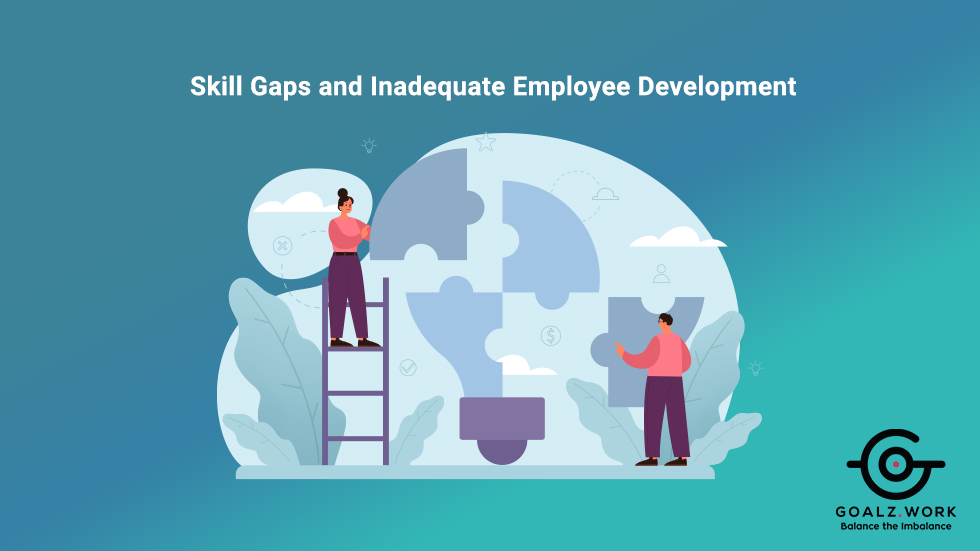
Skill gaps widen with tech advances, as McKinsey highlights insufficient employee development. In 2025, rapid changes demand upskilling, yet many lack personalized plans. This leads to underperformance and frustration.
AIHR notes ineffective training hinders progression. Gartner’s forecast emphasizes future-ready workforces.
Solutions include tailored development via goalz.work’s learning trackers. Succession planning identifies gaps early.
9. High Employee Turnover and Retention Issues
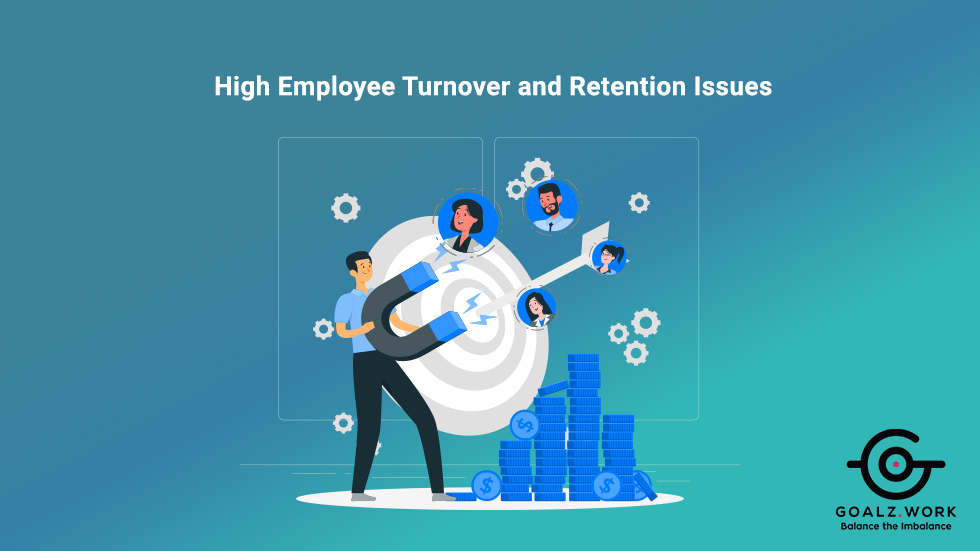
Retention is a top HR challenge, with loss of knowledge impacting performance. In 2025, competitive markets and disengagement drive turnover. Poor management exacerbates this.
AIHR links it to lack of growth opportunities. Strategies like recognition help.
Use Goalz for career mapping to boost loyalty and reduce costs.
10. Difficulties in Measuring Performance and Ensuring Data Privacy
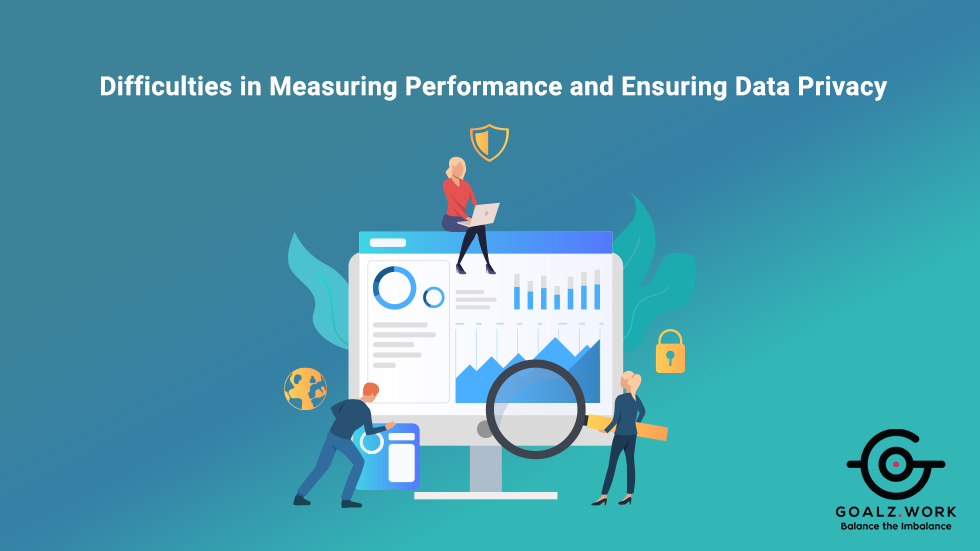
Measuring individual value is ineffective for 75% of organizations. In 2025, data-driven approaches clash with privacy concerns, especially with AI. Compliance adds complexity.
Workday suggests metrics like goal achievement but warns of biases.
Adopt secure tools like Goalz for ethical tracking, ensuring transparency and compliance.
Conclusion
The top 10 performance management issues of 2025—from pervasive distrust in systems to the complexities of measuring performance in a data-driven, privacy-conscious world—highlight the urgent need for adaptive, human-centered strategies. These challenges, rooted in evolving workplace dynamics like hybrid models, AI integration, and employee well-being, demand a cultural shift toward transparency, engagement, and continuous improvement. At Goalz, we’re committed to empowering organizations with intuitive tools for setting SMART goals, delivering real-time feedback, and leveraging AI-driven insights for smarter decision-making. By addressing these issues proactively, businesses can boost productivity and foster a workplace where employees feel valued and motivated to excel.
Embracing these solutions isn’t just about fixing problems—it’s about redefining performance management as a driver of innovation and growth. In 2025, organizations that prioritize trust, alignment, and well-being will stand out in competitive markets. Goalz platform offers seamless OKR tracking, feedback modules, and wellness integrations to transform challenges into opportunities. Start your journey toward a high-performing, engaged workforce today—visit Goalz.work for a free trial and unlock a future where performance management fuels success, not stress. Let’s build a workplace that thrives in 2025 and beyond.
Recent Comments