
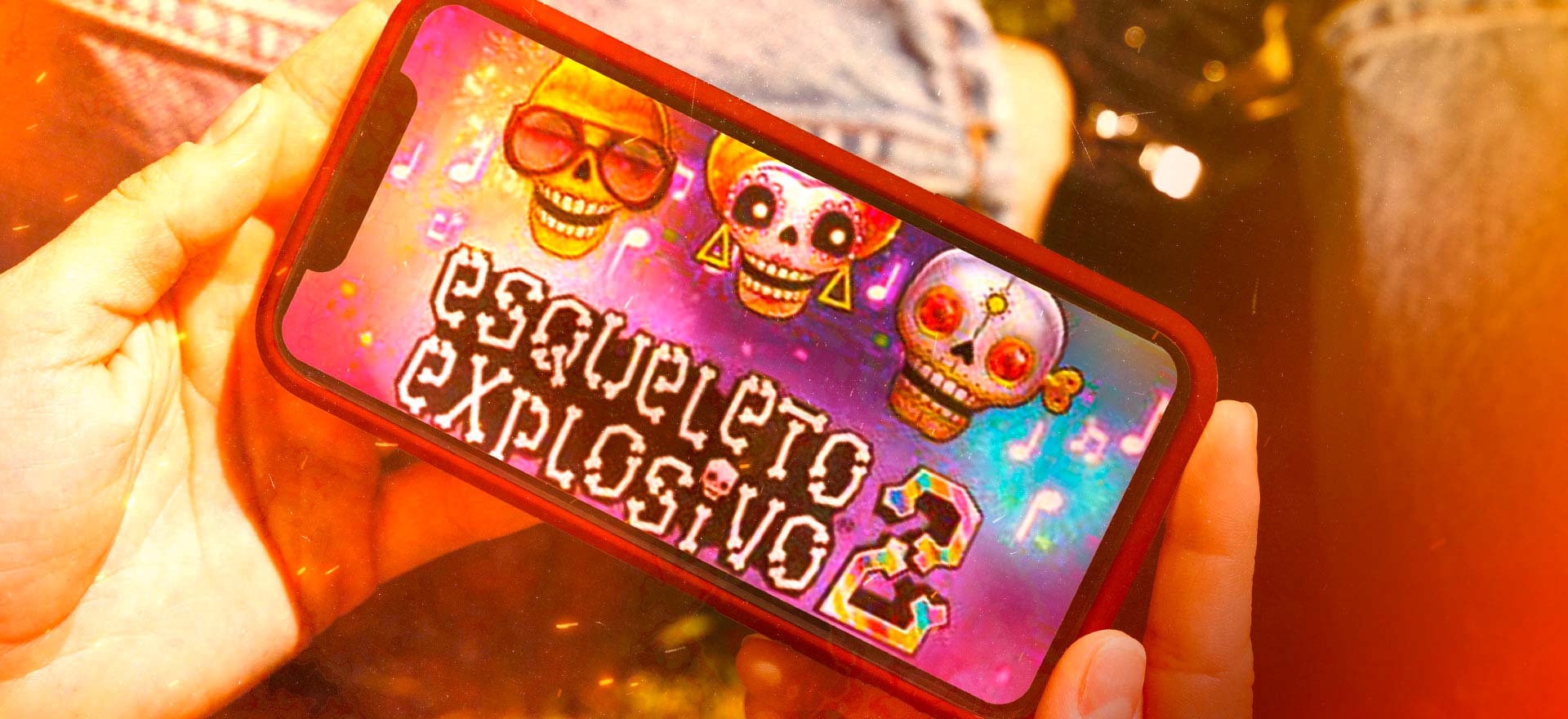
As someone who has observed the progression of online slots for years, I find that truly creative games are rare https://esqueletoexplosivo2.net. When Esqueleto Explosivo burst onto the scene, it was a vibrant, chaotic, and utterly distinctive experience that created its own niche. Now, the sequel, Esqueleto Explosivo 2 Slot, has launched, pledging to amplify everything players enjoyed. To grasp the creative force behind this thrilling follow-up, I sought direct insights from the development team. This article pulls back the curtain the design philosophy, production obstacles, and creative choices that shaped this remarkable title, delivering a rare peek into the studio’s process from initial concept to the final, fiery release.
The Main Idea: Evolving the Dynamic Formula
The original Esqueleto Explosivo was a runaway success, defined by its cascading wins, increasing multipliers, and a vibrant Mexican Day of the Dead theme. The main hurdle for the developers wasn’t just creating a sequel, but refining a cherished formula without sacrificing its soul. The core directive was “more dynamism, more engagement, and more strategic depth.” They recognized that while players loved the mounting tension of the original, they craved more avenues for influence and bigger possible peaks. This resulted in the core concept of the Nitro Feature, a player-triggered bonus that acts as a strategic layer on top of the already explosive base game. The goal was to change a purely responsive experience into one where players could, at key moments, sense a sense of agency, choosing when to introduce pure chaos into the reels for potentially monumental rewards.
Another essential element was enhancing the audiovisual spectacle while keeping clarity. The team understood the sequel needed to seem instantly familiar yet visually superior. They improved the skeleton characters, giving them more personality and smoother animations, and greatly enhanced the particle effects for explosions and cascades. The soundtrack and sound design received equal attention, with more layered music that responds to gameplay intensity and clearer, more impactful sound effects for every tumble and win. This thorough attention to sensory detail ensures that every spin is an captivating event, expanding on the original’s strong identity rather than merely replicating it.
Sound Design and Sound Identity
In a slot as visually busy as Esqueleto Explosivo 2, sound design is essential in steering the player’s emotional journey. The audio team defined their strategy as “orchestrated chaos.” The base track is an genuine, upbeat mariachi tune, but it’s dynamically layered. During the base game, it maintains a festive but steady tempo. As a cascade sequence begins and the multiplier increases, brass instruments grow, and the percussion becomes more distinct, subtly amplifying the excitement without drowning the player. The most dramatic audio shifts are saved for the Nitro Feature and big wins, where the music hits a crescendo joined by a riot of festive sound effects.
Every single component has a distinct sonic signature. Different skeleton symbols have their own brief musical stings when triggering a win. The cascade itself is accompanied by a gratifying “pop” and tumbling sound, while the multiplier growing is signaled by a distinct, rising tonal cue. This thorough audio feedback is crucial; it allows players to grasp exactly what is taking place on the reels even if they only glance at the screen. The team emphasized that great slot audio isn’t just background music; it’s a vital information delivery system and an emotional driver, making wins feel more tangible and the overall experience more unified and polished.
Math and Mechanics: Designing the Nitro Feature
The mathematical model, or math behind the slot, is its hidden engine. For Esqueleto Explosivo 2, the critical task was integrating the fresh Nitro Feature without disrupting the fine equilibrium of the original cascade system. The main game maintains the beloved increasing multiplier that rises with every successive cascade, resetting solely on a losing spin. The designers studied extensive data from the original game to determine a win frequency and risk level that felt familiar yet fresh. The Nitro Feature, triggered by gathering nitro symbols, was designed as a managed variance increase. When activated, it guarantees a cascade by replacing low-value symbols, but its position is random, producing moments of intense excitement.
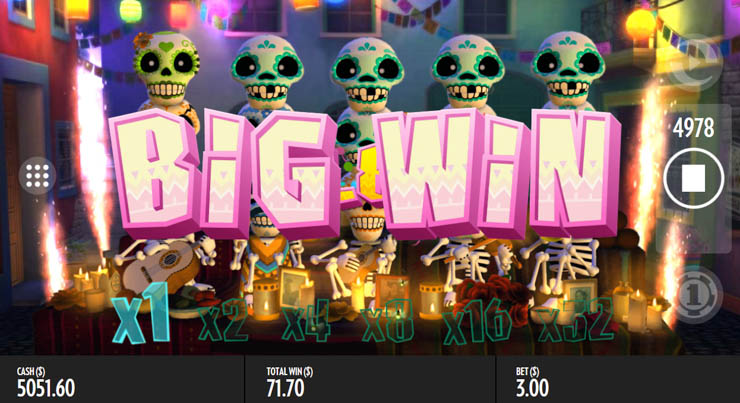
Fine-tuning this feature was a challenging job. The crew conducted thousands of tests to guarantee the Nitro meter filled at a pace that was satisfying yet not overly common, keeping its exclusive feel. They also had to calibrate the potential of the Nitro explosions to provide substantial winning possibilities without ensuring the base game remains exciting in contrast. The end product is a slot with a dual-layer volatility: the gradual, escalating suspense of the base game punctuated by the explosive, high-stakes moments of the Nitro activation. This creates a more dynamic rhythm, appealing to players who enjoy both extended play sessions and the hunt for thrilling, special-feature wins.
Art and Animation: Infusing Energy into the Bony Characters
The visual approach of Esqueleto Explosivo 2 is misleadingly straightforward. Attaining that ideal harmony between cartoonish charm and macabre whimsy needed numerous revisions. The artists noted that the bony figures had to be lively and vibrant, not frightening, with their festive skull patterns carefully crafted to be complex yet readable on tiny handheld devices. Every persona, from the main mariachi figure to the accompanying performers, was provided a distinct color palette and item ensemble to enhance aesthetic appeal during the chaotic action. The background was deepened, incorporating more parallax scrolling elements and celebratory touches like hovering decorations and twinkling lights, crafting a world that appears lively and sprawling.
Animation was where the real technical mastery stood out. The team deployed a sophisticated joint-driven animation setup, allowing for fluid, articulated action of the figures. This is most evident in the triumph sequences; when a major payout happens, the whole team explodes into a synchronized dance that is both a reward and a show. The tumbling system itself is an animation wonder. Instead of images merely fading, they are fragmented with custom particle effects, and new symbols fall into position with realistic motion. The crew devoted months refining the timing and “weight” of these tumbles to make them feel satisfyingly chunky and striking, a crucial factor in preserving user interest through long winning sequences.
Technical Challenges and Optimization Challenges
Creating a slot with this level of constant animation and real-time particle effects presented significant technical hurdles. The primary challenge was guaranteeing seamless performance across all devices, from high-end desktops to older smartphones. The developers built a custom rendering pipeline to handle the hundreds of animated sprites and particles that can be on screen simultaneously during a large cascade. They implemented level-of-detail systems that automatically decrease visual complexity on less powerful devices without sacrificing the core game feel, preserving the explosive personality remained intact even on smaller screens.
Another major focus was the game’s memory management. With high-resolution assets for numerous symbols and animations, loading times were a worry. The team utilized advanced texture atlasing and asset streaming techniques to keep the initial load quick and ensure smooth transitions during gameplay. The sophisticated cascade and multiplier logic also needed robust and bug-free code to handle edge cases, like multiple Nitro triggers in a single spin. Rigorous testing across a vast matrix of devices and network conditions was crucial to offer the stable, polished experience players expect from a major studio release, where a single graphical glitch or lag spike can disrupt immersion.
Gamer Response and Iterative Process
The development of Esqueleto Explosivo 2 was not carried out in a isolation. Early versions were shown to test panels consisting of both enthusiasts of the original and new users. The developers closely tracked which mechanics provoked excitement and which caused confusion. Initial concepts for the Nitro meter, for example, were more intricate, involving different nitro types. Feedback indicated this was too much, leading to the refined, single-meter system seen in the final game. Similarly, early versions had a more restrained color scheme, but testers consistently stated it did not have the impact of the original, guiding the artists back toward more vibrant, more saturated colors.
This iterative process extended to the game’s tempo. Data from player trials indicated that while gamers enjoyed the big multiplier increases, there could be long stretches without a Nitro trigger. The group adjusted the symbol arrangement and meter fill speed to create a more steady pattern of lesser highlights between the major feature events. This gamer-oriented approach was fundamental; it ensured the game was being shaped not just by design documents, but by genuine human reactions and engagement trends, resulting in a final product that appears calibrated for fun rather than just conceptual rules.
Recent Comments