
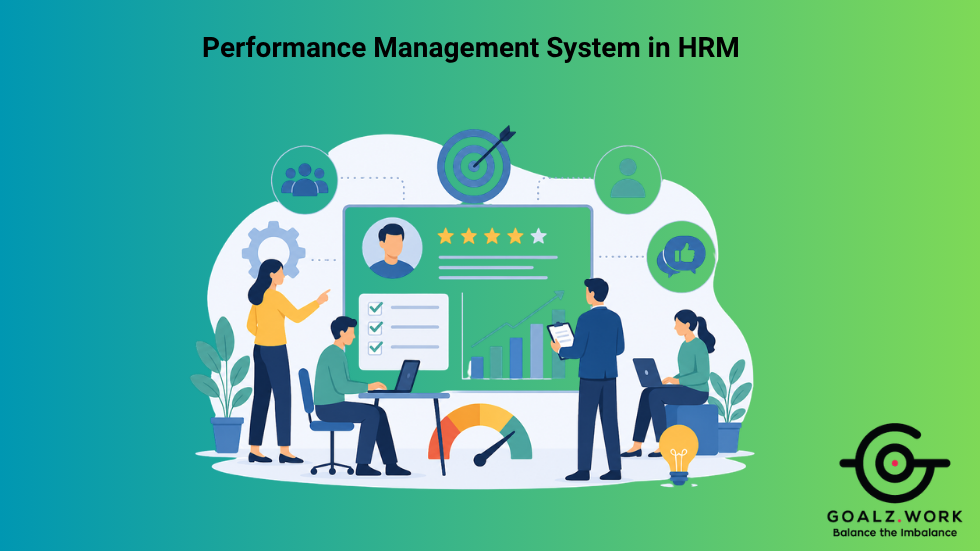
In today’s fast-evolving business landscape, organisations are no longer measuring success purely through revenue or output. Instead, the focus has shifted toward employee performance, productivity, and alignment with organisational goals. This shift has made performance management systems (PMS) a cornerstone of Human Resource Management (HRM).
A Performance Management System in HRM is not just a tool for annual appraisals—it is a continuous, data-driven approach to managing employee performance, fostering growth, and aligning individual contributions with business objectives. Companies that adopt modern PMS solutions gain a competitive advantage by improving workforce efficiency, engagement, and retention.
With the rise of remote and hybrid work models, businesses in India and globally are increasingly relying on advanced platforms like Goalz to streamline performance management and create high-performing teams.
This guide explores everything you need to know about performance management systems—from fundamentals and components to benefits, trends, and implementation strategies.
Performance Management System Statistics 2026
Understanding the importance of PMS becomes clearer when we look at industry data:
- Organisations with effective performance management systems see up to 30% higher productivity
- Companies using continuous feedback models experience 14.9% lower employee turnover
- 90% of HR leaders believe performance management is critical to business success
- 70% of employees say regular feedback improves their engagement
- Businesses using OKR frameworks report significantly improved goal alignment
These statistics highlight that performance management is no longer optional—it is essential for business growth and sustainability.
What is Performance Management System in HRM
A Performance Management System (PMS) is a structured framework used by organisations to monitor, evaluate, and improve employee performance continuously.
Definition
It involves:
- Setting clear goals
- Monitoring performance
- Providing feedback
- Evaluating results
- Rewarding achievements
Unlike traditional appraisal systems, PMS is continuous, strategic, and data-driven.
Objectives of Performance Management System
The main objectives include:
- Aligning employee goals with business objectives
- Improving individual and team performance
- Enhancing employee engagement
- Identifying skill gaps and training needs
- Supporting career development
- Driving organisational growth
Key Components of a Performance Management System
1. Goal Setting
Setting clear and measurable objectives using frameworks like OKRs or KPIs.
2. Continuous Monitoring
Tracking employee performance in real time rather than waiting for annual reviews.
3. Feedback Mechanism
Providing regular feedback to help employees improve.
4. Performance Appraisal
Evaluating performance based on predefined criteria.
5. Employee Development
Offering training and development opportunities.
6. Rewards and Recognition
Recognising high performers to motivate employees.
Traditional vs Modern Performance Management
| Aspect | Traditional PMS | Modern PMS |
| Reviews | Annual | Continuous |
| Feedback | Limited | Real-time |
| Focus | Evaluation | Growth |
| Tools | Manual | Digital platforms |
| Engagement | Low | High |
Modern systems like Goalz focus on continuous improvement rather than periodic evaluation.
Why Performance Management is Important in HRM
1. Improves Productivity
Employees perform better when they have clear goals and feedback.
2. Enhances Employee Engagement
Regular communication builds trust and motivation.
3. Aligns Workforce with Business Goals
Ensures everyone works toward common objectives.
4. Identifies High Performers
Helps recognise and retain top talent.
5. Supports Decision Making
Provides data for promotions, compensation, and training.
Performance Management Process
Step 1: Planning
Define goals and expectations.
Step 2: Monitoring
Track progress using dashboards and reports.
Step 3: Reviewing
Evaluate performance regularly.
Step 4: Feedback
Provide constructive feedback.
Step 5: Rewarding
Recognise achievements and contributions.
Types of Performance Management Systems
1. Traditional Appraisal System
Annual performance reviews.
2. 360-Degree Feedback
Feedback from peers, managers, and subordinates.
3. OKR-Based System
Goal-oriented performance tracking.
4. Continuous Performance Management
Real-time tracking and feedback.
Role of Technology in Performance Management
Technology has transformed PMS into a data-driven, automated process.
Modern platforms offer:
- Real-time dashboards
- AI-driven insights
- Automated reporting
- Performance analytics
Tools like Goalz integrate performance management with time tracking and workforce management, creating a unified system.
Benefits of Performance Management Systems
1. Increased Productivity
Employees work more efficiently with clear goals.
2. Better Communication
Improves transparency between managers and employees.
3. Higher Employee Retention
Engaged employees are less likely to leave.
4. Improved Accountability
Employees take ownership of their work.
5. Data-Driven Decisions
Managers can make informed decisions based on analytics.
Challenges in Performance Management
- Resistance to change
- Lack of proper tools
- Ineffective feedback
- Bias in evaluations
- Poor goal setting
How Goalz Transforms Performance Management
Goalz offers a modern approach to performance management by combining multiple functionalities into one platform.
1. OKR-Based Goal Setting
Aligns employee goals with business objectives.
2. Real-Time Performance Tracking
Provides live insights into employee performance.
3. Integrated Time Tracking
Links productivity with performance.
4. Automated Reports
Reduces manual effort.
5. Workforce Management Integration
Combines HR, projects, and performance in one system.
Performance Management for Remote Teams
Remote work requires:
- Clear communication
- Real-time tracking
- Continuous feedback
Goalz enables businesses to manage remote teams effectively through dashboards and analytics.
Best Practices for Effective Performance Management
- Set clear and measurable goals
- Provide regular feedback
- Use data-driven insights
- Encourage employee participation
- Recognise achievements
Future Trends in Performance Management
1. AI-Driven Analytics
Predictive performance insights.
2. Continuous Feedback Systems
Replacing annual reviews.
3. Integration with Workforce Tools
Unified platforms like Goalz.
4. Employee Experience Focus
Enhancing engagement and satisfaction.
Why Choose Goalz for Performance Management
Goalz stands out because it:
- Combines performance, HR, and time tracking
- Offers real-time insights
- Supports OKR frameworks
- Enables data-driven decisions
- Scales with business growth
Conclusion
Performance management systems are essential for modern businesses aiming to improve productivity, engagement, and growth. Traditional appraisal methods are no longer sufficient—organisations need continuous, data-driven systems that align employee performance with business objectives.
Platforms like Goalz provide a comprehensive solution by integrating performance management with workforce tracking and analytics, enabling businesses to build high-performing teams and achieve long-term success.
Recent Comments