
In today’s hyper-connected work environment, professionals face an avalanche of tasks, messages, and demands competing for their attention. The challenge isn’t a lack of effort — it’s a lack of clarity. Most people stay busy all day yet wonder why they aren’t making meaningful progress toward their real goals. Sound familiar?
The root cause is almost always the same: we confuse urgency with importance. We react to what feels pressing in the moment and neglect the deeper, more impactful work that drives long-term success. This is the productivity trap — and it affects individuals, teams, and entire organizations.
Enter the Eisenhower Time Management Matrix — a deceptively simple yet profoundly powerful framework developed from the productivity philosophy of President Dwight D. Eisenhower. Also known as the Urgent-Important Matrix, this tool cuts through the noise and gives you a crystal-clear picture of where your time and energy truly belong.
In this comprehensive 2026 guide, we’ll walk you through everything you need to know — from understanding the matrix conceptually to applying it practically with Goalz.Work, a platform built to turn your strategic priorities into daily action.
What is the Eisenhower Time Management Matrix?
The Eisenhower Matrix is a productivity and decision-making framework that organizes tasks into four distinct categories based on two dimensions: urgency and importance. The framework is named after the 34th President of the United States, Dwight D. Eisenhower, who was renowned for his extraordinary ability to manage competing priorities — first as Supreme Allied Commander during World War II and later as a two-term president.
Eisenhower reportedly said: “I have two kinds of problems: the urgent and the important. The urgent are not important, and the important are never urgent.” This insight is the philosophical core of the entire framework.
The matrix was later popularized by Stephen Covey in his landmark book The 7 Habits of Highly Effective People, and has since become a staple in productivity, leadership, and business management circles worldwide.
The two key dimensions are:
- Urgency: Does this task require immediate attention? Will there be negative consequences if it’s not handled right now?
- Importance: Does this task contribute meaningfully to your long-term goals, values, or responsibilities?
By evaluating every task through these two lenses, you gain the clarity to know exactly what to act on, what to plan, what to hand off, and what to stop doing altogether.
The Four Quadrants: A Deep Dive
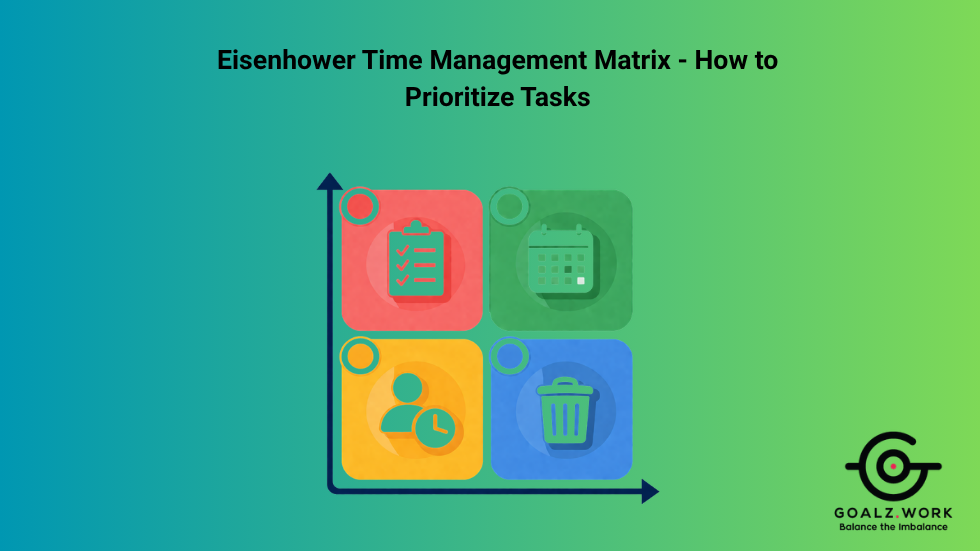
The matrix is a simple 2×2 grid that produces four actionable quadrants. Understanding the nature of each quadrant — and the types of tasks that belong there — is the foundation of effective prioritization.
Quadrant 1: Urgent & Important — Do First
These are your true crises — tasks that demand immediate attention and carry significant consequences if ignored. Think of a server going down right before a major product launch, a critical client deadline that’s today, or an emergency that threatens health, safety, or business continuity.
Common examples:
- Fixing critical production bugs or system outages
- Responding to a client crisis or contract dispute
- Meeting a hard, immovable project deadline
- Medical or personal emergencies
The danger of Quadrant 1: spending too much time here leads to chronic stress, burnout, and firefighting mode. High-performing leaders aim to minimize Q1 by being proactive in Quadrant 2.
Quadrant 2: Not Urgent but Important — Schedule
This is the quadrant of strategic excellence and the one that most successful professionals deliberately cultivate. These tasks don’t scream for your attention today, but they are the foundations of long-term success, growth, and fulfillment.
Common examples:
- Strategic business planning and goal-setting
- Skill development and professional learning
- Building meaningful client and team relationships
- Process improvement and systems design
- Health, wellness, and mental recovery
- Mentoring team members and developing talent
The insight of Quadrant 2: the more intentional time you invest here, the less time you’ll spend fighting fires in Quadrant 1. This quadrant is where leaders are built and businesses are grown. Scheduling dedicated, protected time for Q2 work is a hallmark of high-performing individuals.
Quadrant 3: Urgent but Not Important — Delegate
These tasks feel urgent because someone or something is demanding your attention right now — but they don’t actually move the needle on your most important goals. This is the quadrant of interruptions, reactive tasks, and the false busyness trap.
Common examples:
- Meetings that could have been emails or don’t require your presence
- Routine status update requests and administrative check-ins
- Low-priority emails marked ‘urgent’ by others
- Interruptions and unplanned drop-in conversations
- Tasks others could handle with proper delegation
The trap of Quadrant 3: it mimics productivity. You’re responding, reacting, and checking things off — but none of it drives your real goals. The solution is assertive delegation, clear communication of boundaries, and learning to say no.
Quadrant 4: Not Urgent & Not Important — Eliminate
These are the time wasters — activities that provide little to no meaningful return on your most valuable resource: time. While everyone needs downtime and rest (which belongs in Q2), mindless Q4 activities simply drain your capacity without replenishing it.
Common examples:
- Endless social media scrolling with no purpose
- Excessive TV or entertainment beyond genuine rest
- Unnecessary meetings attended out of habit or obligation
- Busywork that adds no value to projects or goals
- Gossip, complaint sessions, or unproductive venting
The goal isn’t to eliminate all leisure — recovery is essential. The goal is to be intentional: replace unconscious Q4 activities with purposeful rest and renewal that genuinely recharges you.
Why the Eisenhower Matrix Works: The Psychology Behind It
The matrix works because it interrupts our natural cognitive biases around urgency. Human brains are wired to respond to immediate threats and stimuli — a survival mechanism that made sense on the savannah but wreaks havoc in the modern workplace. Every ping, notification, and urgent request triggers a stress response that feels like it demands immediate action.
The matrix creates a deliberate pause — a moment of structured reflection that allows your rational, strategic mind to override reactive impulse. Instead of asking “what is loudest right now?” you ask “what actually matters?” This is a profound cognitive shift.
Research-backed benefits include:
- Reduced decision fatigue through clearer prioritization criteria
- Lower cortisol levels and stress from reactive firefighting
- Higher output quality through focused deep work in Q2
- Greater sense of control, purpose, and job satisfaction
- Stronger alignment between daily actions and long-term goals
How to Apply the Eisenhower Matrix: Step-by-Step
Knowing the theory is one thing; implementing it consistently is another. Here is a practical, field-tested process for applying the matrix in your daily and weekly workflow.
Step 1: Capture Everything — The Total Brain Dump
Start with a complete, unfiltered brain dump of every task, project, obligation, and idea floating in your head. Don’t judge, filter, or prioritize yet — just get it all on paper (or into your task management system). Studies show that this process alone reduces cognitive load and mental anxiety.
Step 2: Evaluate Each Task Honestly
For each task, ask two questions:
- Is this task genuinely urgent? (Does it have a real, imminent deadline or consequence?)
- Is this task truly important to my goals, role, or values?
Step 3: Assign Each Task to a Quadrant
Place each task into the appropriate quadrant. Be brutally honest — the tendency is to overestimate urgency (because it triggers stress) and to underestimate importance (because it requires discipline). If a task is truly Q2, protect time for it; don’t let it slip into Q1 neglect.
Step 4: Take the Right Action for Each Quadrant
- Quadrant 1 (Do First): Tackle immediately. Allocate your peak-energy hours for this work.
- Quadrant 2 (Schedule): Block dedicated calendar time. Guard it fiercely. This is your strategic investment time.
- Quadrant 3 (Delegate): Assign to someone else if possible. If delegation isn’t available, batch and minimize.
- Quadrant 4 (Eliminate): Simply stop doing these tasks. Or set strict time limits to contain them.
Step 5: Review and Recalibrate Weekly
At the end of each week, take 15–30 minutes to review your matrix. What moved between quadrants? Are you spending more time in Q2 than last week? Tracking this over time reveals powerful patterns and drives continuous improvement.
The Eisenhower Matrix for Teams and Organizations
While the matrix is often taught as a personal productivity tool, its true power scales dramatically when applied at the team and organizational level. In fact, misaligned team priorities are one of the leading causes of project failure, missed deadlines, and employee burnout.
When teams use a shared prioritization framework, collaboration improves and confusion decreases. Everyone understands not just what they’re working on, but why it matters and how urgently it needs to be done.
Team-level benefits of the Eisenhower Matrix:
- Clearer task ownership — everyone knows who is responsible for what
- Fewer bottlenecks — urgent blockers are identified and resolved faster
- Better project timelines — teams stop firefighting and start planning
- Reduced meeting overload — Q3 meetings are challenged and eliminated
- Stronger manager-team alignment on what constitutes ‘priority work’
Imagine a product team where the engineering lead, the project manager, and the client success manager all share a common view of what’s urgent and important. Misunderstandings drop. Productivity soars. This is the power of a shared prioritization language.
Common Mistakes — And How to Avoid Them
Mistake 1: Labelling Everything as Urgent
This is the most common failure mode. When everything is Q1, the matrix loses all meaning. Urgency inflation — the tendency to treat every task as a crisis — often stems from anxiety, people-pleasing, or poor expectation-setting. Practice urgency audits: before marking something urgent, ask yourself “What is the real consequence of delaying this by 24 hours?” Most things that feel urgent are not.
Mistake 2: Chronically Neglecting Quadrant 2
Many professionals intellectually understand the importance of strategic work but never actually schedule time for it. The result: they remain permanently reactive, always in Q1 and Q3. The fix is to treat Q2 time like your most important meeting of the day — non-negotiable, blocked in your calendar, and protected from interruption.
Mistake 3: Delegating Without a System
Delegation isn’t just handing a task off — it requires clear expectations, defined outcomes, appropriate authority, and a follow-up mechanism. Without these elements, delegated tasks either bounce back or fall through the cracks. Platforms like Goalz.Work provide the task assignment, tracking, and accountability infrastructure to make delegation reliable.
Mistake 4: Not Reviewing the Matrix Regularly
Priorities shift. A Q2 task can become Q1 if it’s repeatedly deferred. The matrix is a living document, not a set-and-forget system. Build a weekly review ritual — 20 minutes every Friday or Monday to reassess, reassign, and recalibrate. Consistent review is what transforms the matrix from a one-time exercise into a sustained productivity discipline.
How Goalz.Work Brings the Eisenhower Matrix to Life
Understanding the Eisenhower Matrix is valuable. Consistently applying it — especially within teams — requires the right infrastructure. This is exactly where Goalz.Work delivers transformative value.
Goalz.Work is a comprehensive work management and goal tracking platform that bridges the gap between strategic intent and daily execution. It’s designed for teams that are serious about turning their priorities into measurable progress.
Centralized Task Management
All tasks — from individual responsibilities to team projects — live in one place. This eliminates the fragmentation that causes important work to fall through the cracks. Team members have instant visibility into what’s on their plate, who owns what, and what the current status is across the organization.
Goal-Aligned Task Prioritization
Every task in Goalz.Work can be directly linked to a specific goal or KPI. This makes it immediately visible whether a task falls into Quadrant 2 (aligned with key strategic outcomes) or Quadrant 3 (busy work with no clear goal connection). Teams that can see this alignment work smarter, not just harder.
Smart Scheduling and Time Blocking
Goalz.Work’s scheduling tools allow managers and team members to plan important but non-urgent work before it becomes an emergency. With shift management, project timelines, and task deadlines all integrated in one view, the platform prevents the common pattern of Q2 work drifting into Q1 territory.
Delegation and Accountability Infrastructure
One of the most powerful features for implementing the matrix at scale is Goalz.Work’s task assignment and tracking system. Tasks can be assigned to specific team members, deadlines set, priorities flagged, and progress tracked — all with full transparency. This makes delegating Q3 tasks reliable and reduces the anxiety managers often feel about letting go.
Performance Analytics and Productivity Reporting
With Goalz.Work’s built-in performance management and productivity reports, teams can track not just task completion but where their time is actually going. This quadrant-level awareness allows leaders to coach team members toward more Q2 focus and identify patterns of Q3 or Q4 time waste at the organizational level.
Advanced Strategies for 2026: Taking the Matrix Further
Combine with Time Blocking
Time blocking is the practice of scheduling dedicated calendar slots for specific categories of work. Combining this with the Eisenhower Matrix is incredibly powerful: block your best-energy morning hours for Q1 and Q2 tasks, and batch Q3 tasks into defined windows (e.g., 30 minutes for emails at 10am and 3pm). This protects your deep work and prevents reactive tasks from colonizing your entire day.
Leverage AI for Smarter Task Evaluation
In 2026, AI-powered work management tools can analyze task patterns, predict urgency, and suggest prioritization based on historical data and goal alignment. Integrating AI assistance into your prioritization workflow can significantly reduce the cognitive effort of matrix categorization and increase its consistency across teams.
Run Weekly Team Priority Reviews
Establish a weekly team ritual — a 30-minute meeting specifically focused on reviewing and aligning on quadrant assignments for the upcoming week. This creates shared priority clarity, surfaces misalignments early, and ensures the entire team is moving in the same direction. Over time, this becomes one of the highest-ROI meetings in your calendar.
Measure Your Quadrant Distribution
Track how much time you and your team are spending in each quadrant over weeks and months. The ideal distribution for high-performing teams tends toward significant Q2 investment, minimal Q1 firefighting, aggressive Q3 reduction, and virtually no Q4 time. If your data shows otherwise, you have a roadmap for immediate improvement.
Conclusion: From Busy to Brilliant
The Eisenhower Time Management Matrix is not just a productivity hack — it’s a mindset transformation. It challenges us to stop confusing motion with progress, and to recognize that the highest-value work is often the work that feels the least urgent.
By consistently asking “Is this urgent?” and “Is this important?” Before acting, you develop the strategic clarity that separates high performers from those who stay permanently busy without ever feeling like they’ve truly achieved something meaningful.
When this framework is embedded in a team culture — and supported by the right tools — the compounding effect is remarkable. Fewer crises. More strategic progress. Stronger goal alignment. A team that doesn’t just work harder, but smarter.
Goalz.Work is designed to be that infrastructure — the platform that takes your strategic priorities and turns them into daily, measurable action. From task management and goal tracking to performance reporting and team collaboration, Goalz.Work empowers individuals and organizations to operate from a place of clarity, intention, and aligned purpose. Ready to transform how your team prioritizes work? Use Goalz.Work and start building the high-performance habits that drive real results.
Recent Comments